
Why I Prefer Temp Tables Over Variables in SQL Server
Why I Still Prefer Temp Tables Over Variables in SQL Server
It's 5:00 PM on a Friday. You just got an alert: the CEO's evening report didn't run. You've a pressing engagement at 6:00. You were planning to leave at 5:15.
Now you need to debug a 1000-line stored procedure.
Do you want to be dealing with undeclared variables scattered throughout the proc, forcing you to execute the entire thing from top to bottom just to understand what's happening? Making changes to code just to see what the results are? Or would you rather test section by section, isolating the problem in minutes instead of re-running the whole proc over and over?
Yeah. Same.
This is why I structure stored procedures with temp tables instead of variables. After all, seeing is believing!
Oh, and by the way, you'll also solve parameter sniffing problems along the way.
The Problem with Variables
Here's an example troubleshooting a stored procedure that's 1000+ lines long. Something's going wrong around line 350. You need to see what the data looks like at that point. With a variable, here's what happens:
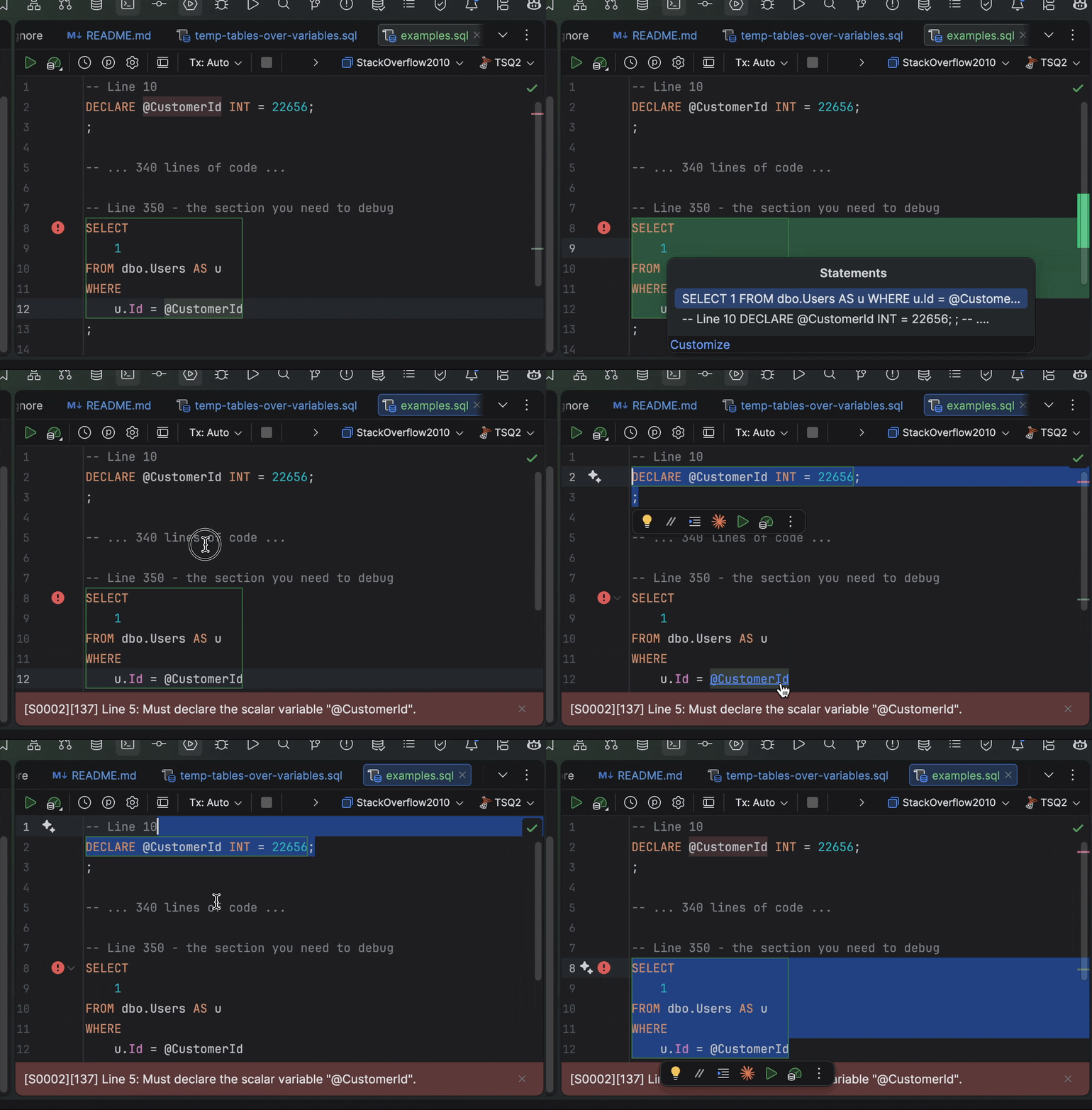
Trying to select the section you need to execute and the section containing the variable? Impossible. Rage inducing.

The Temp Table Approach
Now consider this pattern:
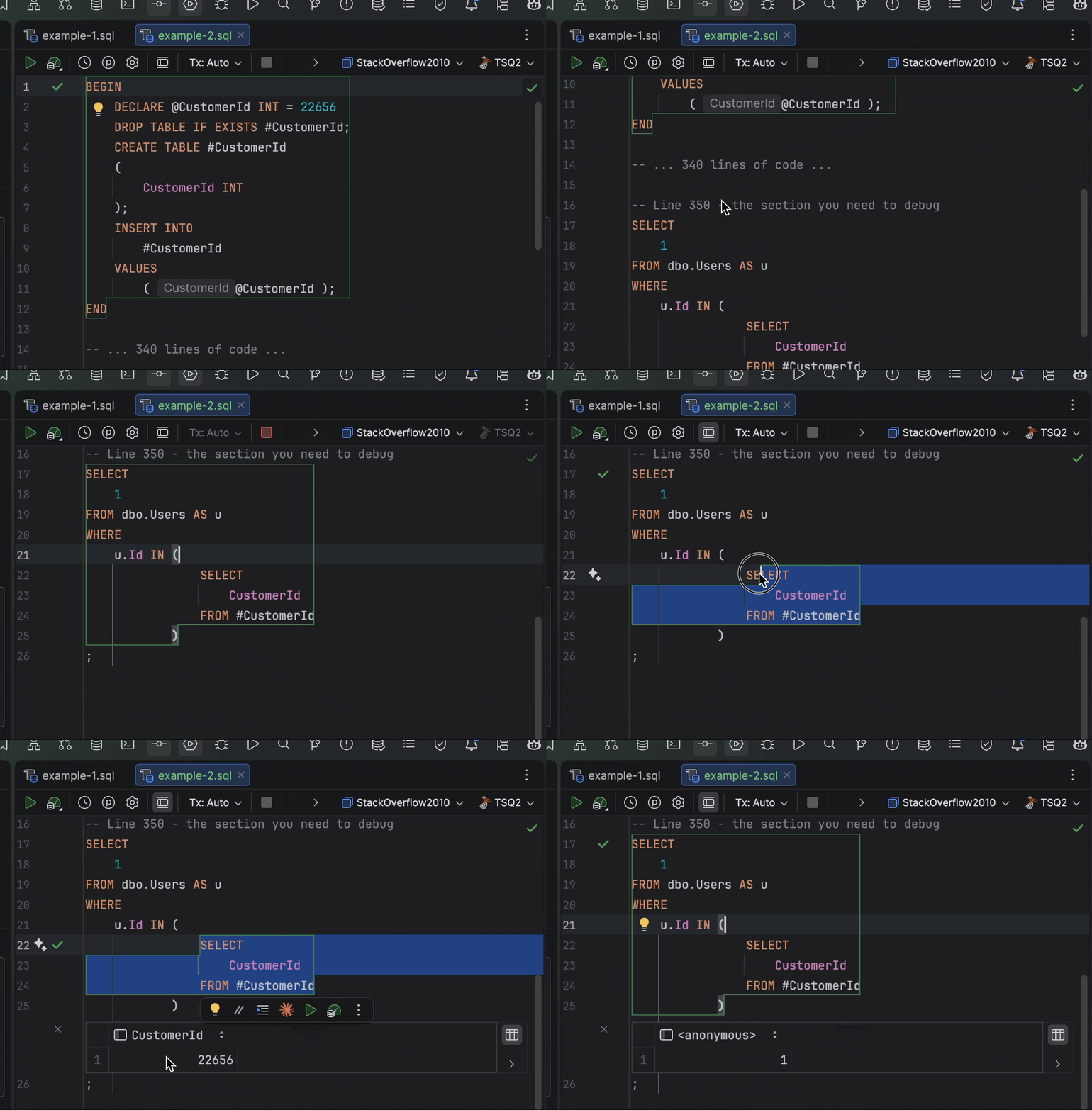
Once the proc has executed once (or you've run that initial setup), the temp table persists for your session. Now you can run and re-run any section of the stored procedure independently.
Debugging this version isn’t painful, you can see the specific variable value without any changes to code. No accidental F5 into production. No debug changes cluttering your commits.
Want to see this in action? I've put together a full working stored procedure on GitHub that demonstrates all these patterns. Grab it run against the Stack Overflow 2010 database. You'll feel the difference immediately.
About That Parameter Sniffing Thing
Look, I'm not saying parameter sniffing isn't real. It is. And yes, temp tables help with that. When you materialize parameters into temp tables, you avoid some of the plan caching problems that plague parameterized queries.
Honestly slapping an OPTION (RECOMPILE) on a problematic query is often the simplest solution, especially if the query is not executed thousands of times per second.
But for day-to-day stored procedure development, changing your development workflow to help your debugging workflow will bring performance benefits along for the ride.
Additional Patterns
The example above shows the basic pattern, but there are other techniques that pair well with this approach:
Regions in SQL: Using comments to organize code sections (more on this in a future post)
Dev blocks: IF 1=0 BEGIN ... END sections for development/testing code
Shared query libraries: Keeping these patterns in a reusable template library
Each of these deserves its own discussion, but they all work together to make stored procedures more human-friendly.
The Bottom Line
Temp tables are amazing and help you develop and test your code in isolation, section by section, with confidence. It's even better once the team adopts the pattern and all your code reviews work with the same mental model and development pattern.
Give this pattern a shot, and next time you’re staring at a broken proc at 5:00 PM, you’ll know exactly what to do.