Your Brain Is For Having Ideas, Not Holding Them
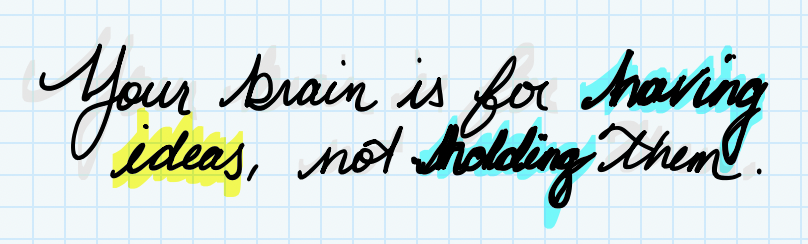
"Your brain is for having ideas, not holding them."
I repeat this enough that people can quote it before I start talking. This principle has changed how I work and how I coach others to work.
We try to hold everything in our heads. The project deadline. That idea for improving the workflow. The thing your boss mentioned in passing. The personal task you need to do this weekend. All of it swirling around, competing for attention, making sure you never fully focus on anything.
It's exhausting. And it's completely unnecessary.
We need to get thoughts, ideas, and tasks out of our heads and into trusted systems. Not because our brains are bad, but because they're good at the wrong things. Your brain is incredible at making connections and solving problems. It's terrible at remembering to send that email on Tuesday.
So stop asking it to do both.
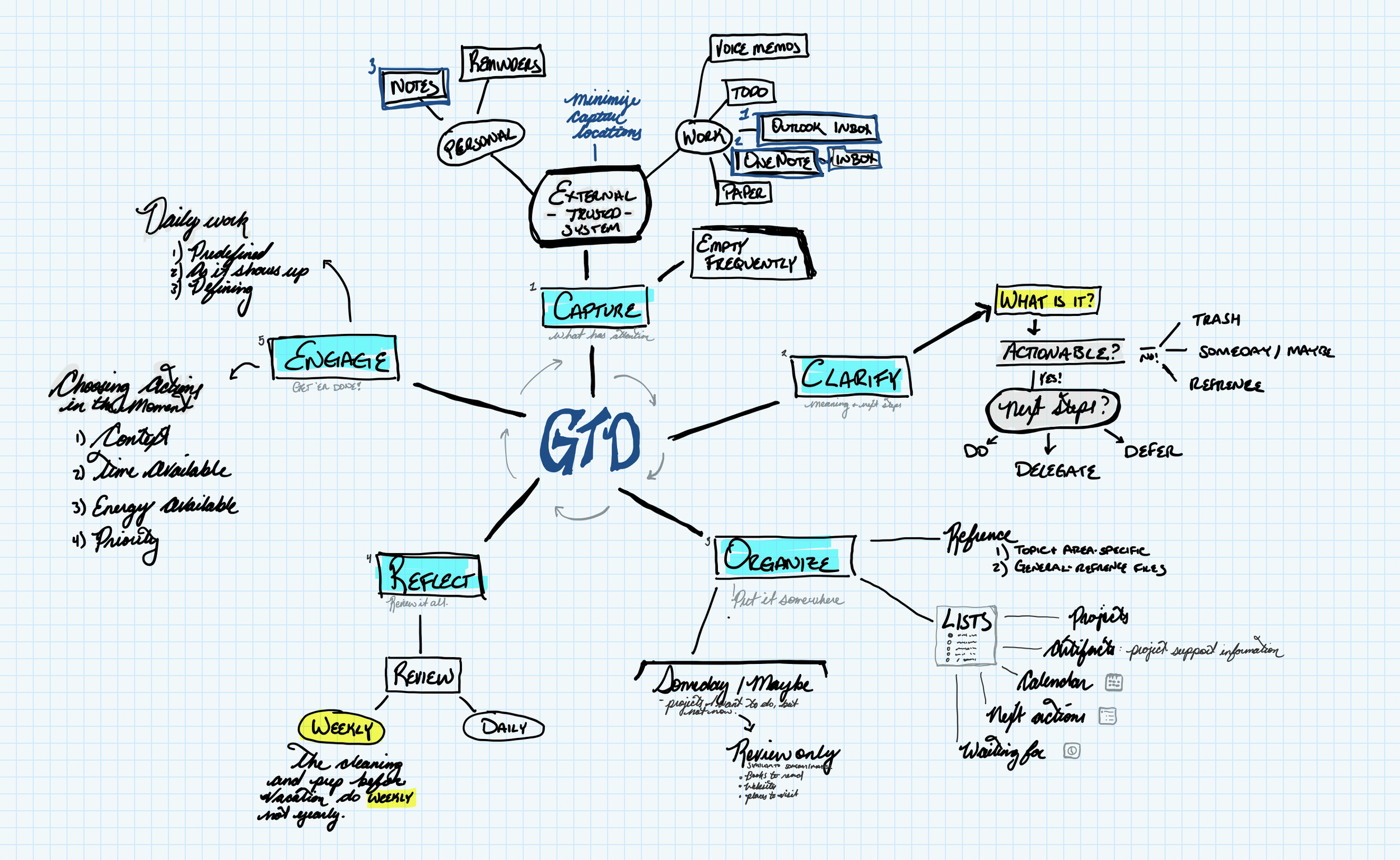
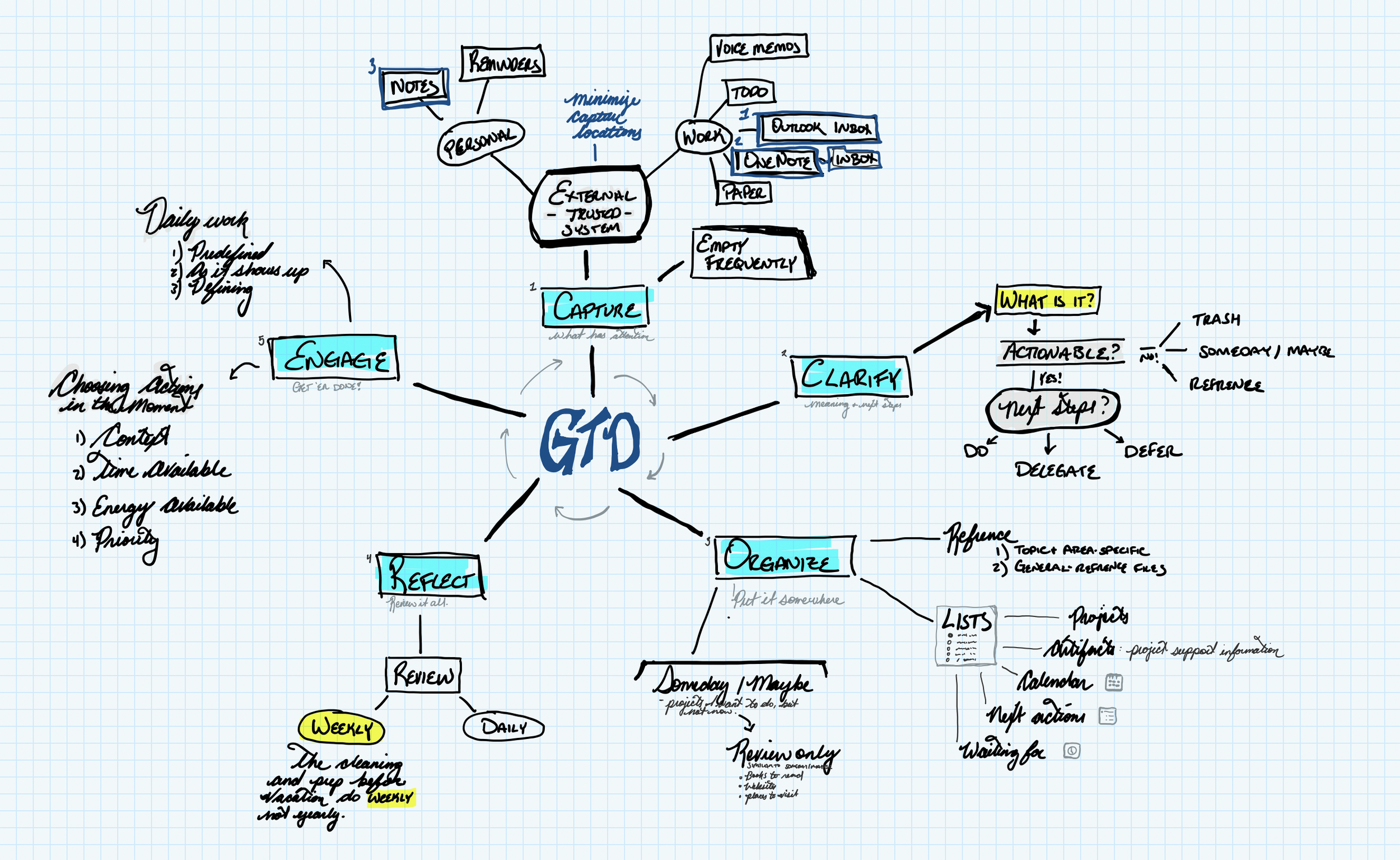
GTD has survived decades of digital transformation. Tools have come and gone, but the system is still here. The reason? It focuses on how humans actually work, not on whatever productivity app is trending this month.
But here's what I've learned: you don't need to adopt the entire GTD system. The capture process is the most important piece. Get that right, and everything else follows.
Capture to a Trusted System First
When something pops into my head, I get it out immediately:
Task that needs doing (for me or someone else)? I fire it into Freshservice using a Raycast script. Right into the ESM ticket queue.
Running commentary as I work? Raycast appends to my Obsidian daily note. Live blogging for work, basically. Millennial hangover from live tweeting everything.
Personal thing? It goes into Reminders.
Random thought at 2am? I email myself.
I don't care how it gets captured. I just care that it gets out of my head and into a trusted system. Once it's captured, I stop thinking about it. That's the whole point.
Your brain is terrible at remembering things. It's great at making connections and solving problems. Let it do what it's good at.
Okay, Now What?
Capturing alone isn't solving any problems. If we're not processing, it'll all turn into a swamp. It's hard to get started with a system and even harder to stick with it. The system needs to work for you, or you'll abandon it.
Think about your ESM system at work. You have external SLAs. You have customers. Things need to get done, and you have a process to make sure they do.
You need to treat yourself the same way. You're your own customer. You need to make sure things actually get done.
Get it into a system you're forced to look at. Whether that's tickets in Freshservice, tasks in Reminders, or just a weekly calendar block to review your notes. The mechanism doesn't matter. What matters is that you actually look at what you captured and decide what to do with it.
There's a lot here you can take from GTD. There's a lot you can take from ITIL. You don't need a full ITIL cert and you don't need to memorize the GTD book. You just need to make sure you and your team aren't dropping the ball. Experiment and try something.
Capture it. Look at it. Do it.
We're paid for our results, not the effort. Don't spend more time building the system than using it.
The Outcome: Peace of Mind
This is what it's really about. At the end of the workday, I can shut my laptop and not think about work. Not because I finished everything, but because what I need to do is recorded: it's in a trusted system.
Nothing is floating around in my head keeping me up at night.
When I start working again, I don't spend the first hour trying to remember what I was working on. I just look at my system and start.
That's the whole point. Capture, move to the most pressing task with confidence that nothing falls through the cracks.