There's Never a Question Where Something Is
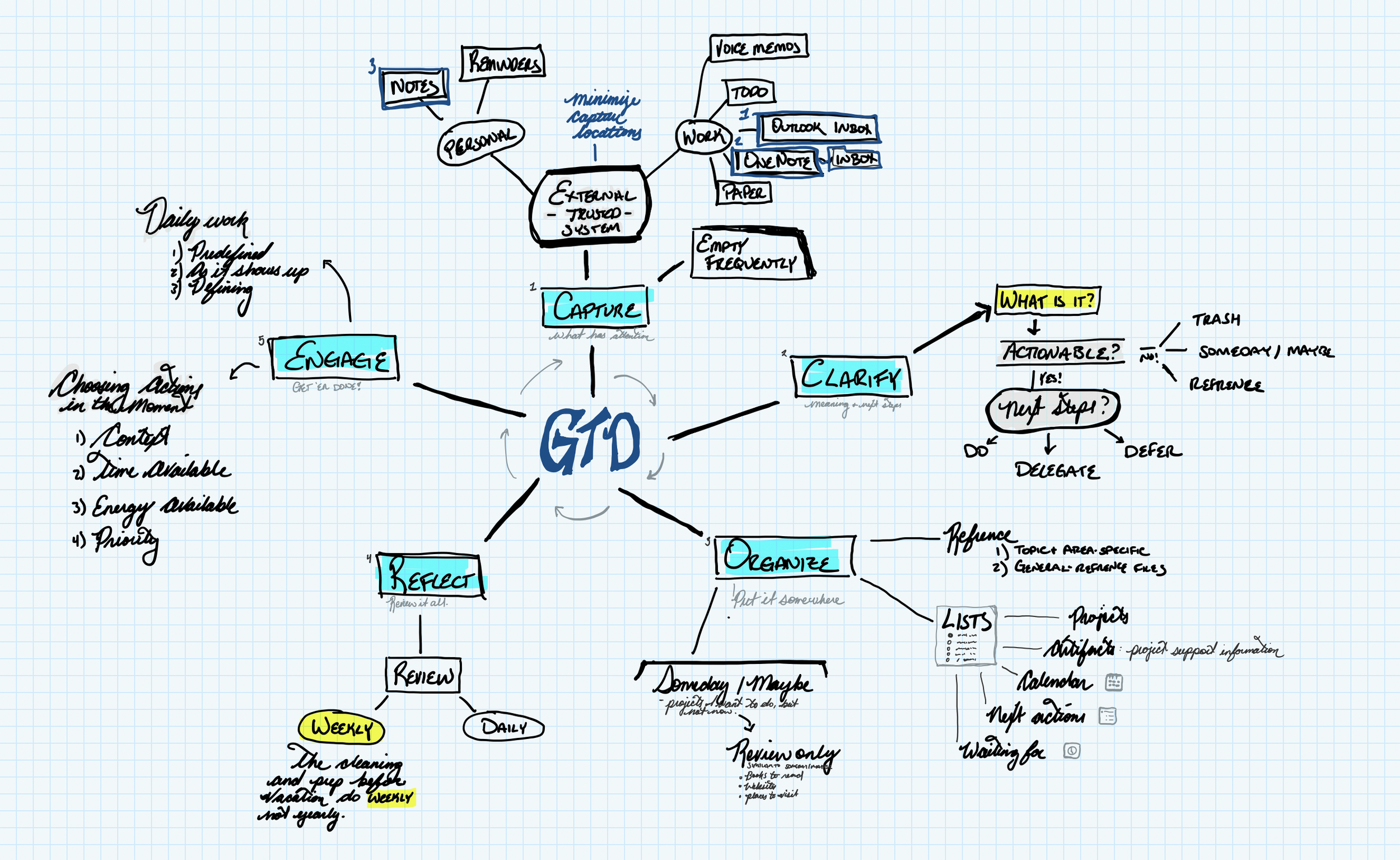
GTD's capture process changed how I work. Brains are for having ideas, not for holding them. Get thoughts out of your head and into a trusted system. That part clicked immediately.
But the weekly review? That's where I fell apart.
I'd sit down to process everything I captured during the week and hit the same wall every time: where do I GO with this? I need to save this file. Where do I put it? My OneDrive was a swamp. Finding work files was impossible. SharePoint search is... well, there's a search box. It won't find your files, but it's there.
I needed a better system. I just didn't know any better.
Then I found PARA, and everything clicked. It maps perfectly to how I think and to GTD. If it's a project, I know where it goes. When it's done, does it become a resource to reference later or just archive it? These questions that used to paralyze me during weekly review suddenly had clear answers.
I had the framework to pair with the capture process.
Why You Need PARA (Even With Your ESM)
Action item at work? That's a ticket in your ESM system. Great. But not everything goes into the ticket system.
That slide deck you need to review with management but don't want to dump into a Teams channel yet? Where does that go? The notes from that conversation about next year's roadmap? You can't be hunting for files. It should be very clear where something is.
Your ESM handles tasks. PARA handles how you structure *data*. You need both.
PARA: The Same Structure, Everywhere
PARA is an acronym, but what it really means is clarity of mind. A clear spot to store your documents.
When I need to file something, I ask myself:
Is this a resource I need to reference at some point in the future? Documentation, templates, technical references. Things I don't need daily but want to find when I do.
Is this a responsibility, something core to what I do day-to-day as a baseline expectation? Team management. Infrastructure maintenance. These don't complete; they just continue.
Well then it must be a project. Something with a clear start and an end. Server migration. Budget planning. When it's done, it moves to Archive.
Otherwise, delete it.
Archive isn't to store everything you write down. It's to keep the documents from the first three categories after you no longer need them directly. Completed projects. Old reference materials that might be useful someday. Not a dumping ground.
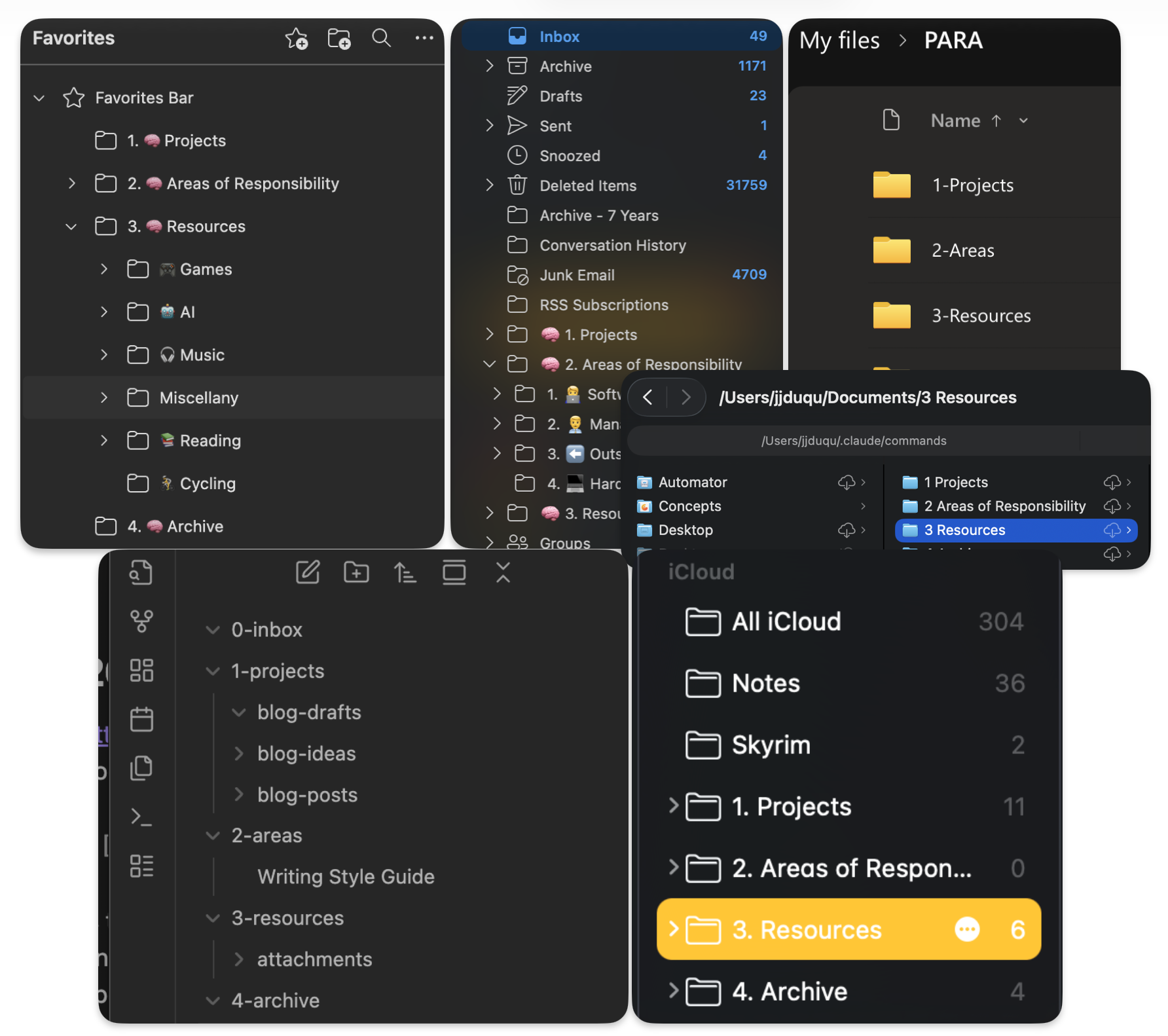
Here's a collection of core systems I use:
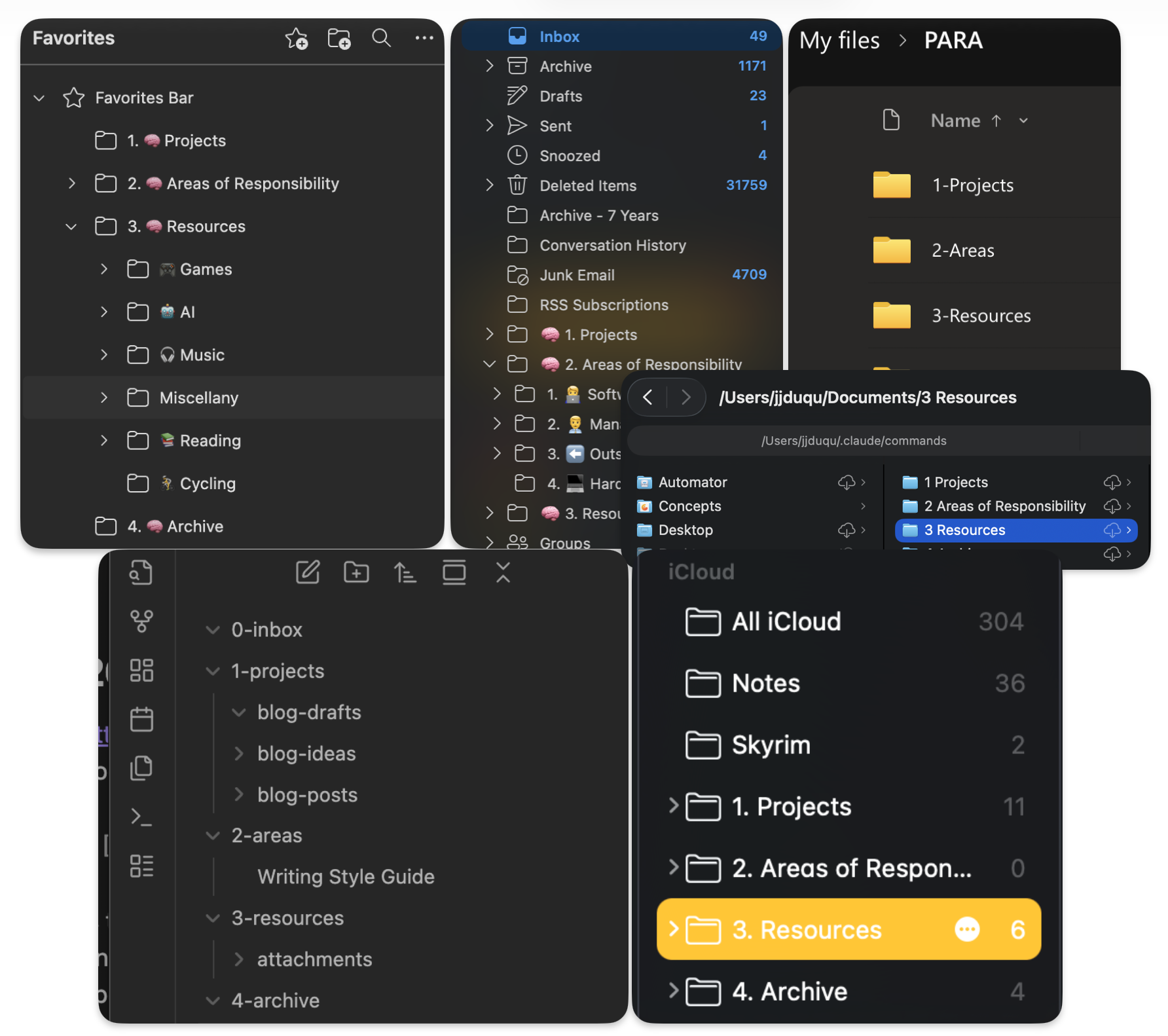
All the same structure. The system doesn't matter, I know where to save something because there's a clear framework. Bookmarks, emails, file structure, Obsidian, Apple Notes. All exactly the same.
There's Never a Question Where Something Is
That's the outcome. Not a fancy system. Not the perfect tool. Just confidence that when I need to find something, I know where to look.
Projects, Areas, Resources, Archive. Four folders. Same everywhere. Done.